Cleaning Schedule Mastery: Your 2026 Blueprint for Portfolio Profitability
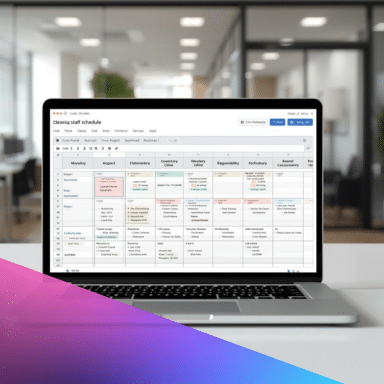
The strategic mandate for property managers in 2026 is clear: profitability over expansion. With market uncertainty making portfolio growth can be a risky bet, your success hinges on maximizing the net operating income from every property you already manage.
The greatest lever you control to achieve this is often the most overlooked your cleaning schedule.
Far more than a simple task list, a master cleaning schedule is a sophisticated operational blueprint. It directly governs your largest variable costs, protects your asset values, and safeguards the five-star reviews that drive revenue.
For managers overseeing 30+ properties, a haphazard approach is a direct threat to your bottom line. This guide provides the data-backed framework to transform your cleaning operations from a persistent cost center into a documented, scalable, and profitable system.

The 2026 Profitability Equation: Why Systemization is Non-Negotiable
The industry is facing a convergence of pressures that make operational excellence the only path to profit. A reactive, people-dependent cleaning process will crumble under these forces. A systematic cleaning schedule is your foundation for stability.
The Labor Crisis: Building Systems, Not Dependencies
The human capital challenge is the top operational constraint. Data reveals that over one-third of property managers lost bookings or suffered negative reviews in 2025 directly due to cleaning and staffing failures. High turnover means institutional knowledge constantly walks out the door, creating “operational debt” that degrades quality over time.
- The Strategic Imperative: You can no longer rely on a few superstar cleaners. Your business continuity depends on capturing their knowledge in systems.
- The Schedule as Solution: A master cleaning schedule, paired with digital Standard Operating Procedures (SOPs), ensures your standards are embedded in checklists and workflows, not just in employees’ heads. This makes your operation resilient to turnover, simplifies training, and guarantees consistent execution across your entire portfolio, regardless of who shows up to work.
The Guest Expectation: “Proof of Clean” is the New Standard
Guest expectations have evolved from hoping for cleanliness to demanding verifiable proof. In a crowded market, a clean property is the baseline; transparency is the differentiator.
- The Data Point: Industry analysis consistently shows cleanliness is the #1 factor in guest satisfaction and a primary driver of review scores. It is a non-negotiable “deal-breaker.”
- The Schedule as Solution: A digitally managed cleaning schedule generates the evidence guests seek. It allows you to communicate proactively: “Your property was inspected at 3:15 PM per our 52-point checklist.” You can share sanitized logs or completion certificates, transforming your operational rigor into a powerful trust-building and marketing tool that can justify premium pricing.
The Margin Squeeze: Precision as Profit
In a year focused on net operating income, inefficiency is a silent profit killer. Unoptimized labor, excessive turnover times, and preventable damages erode margins property by property.
- The Trend: Leading managers are adopting a “real business” mindset, using data to identify and eliminate “operational friction” in every process.
- The Schedule as Solution: An optimized cleaning schedule is the control panel for efficiency. By analyzing data on cleaning times, travel routes, and supply usage, you can cluster work geographically, right-size time allocations, and reduce costly last-minute scrambles. This precision directly shrinks your largest variable cost and maximizes the bookable time for each property
The Foundational Audit: Building Intelligence Into Your Portfolio
You cannot manage what you do not measure. The first step is moving from a generic schedule to a portfolio-specific operating model.
Conduct a Granular Property Categorization
Not all properties are equal. A one-size-fits-all cleaning schedule wastes resources. Audit your portfolio using these lenses:
- Complexity Tier: Create tiers (e.g., Tier 1: Studio/1-bed apartment; Tier 2: 2-3 bed home; Tier 3: 4+ bed home with premium amenities like a pool or hot tub). Each tier has a different base time and a checklist requirement.
- Turnover Frequency Profile: A downtown condo with 2-night stays has different needs than a rural cabin booked by the week. Schedule deep cleans accordingly.
- Geographic Clustering: Map all properties. The goal is to create cleaning zones to minimize travel time, fuel costs, and fatigue for your teams.
Define Unwavering Standards: The SOP Library
Clarity is kindness. Ambiguity leads to missed spots and guest complaints. Document every standard into a living SOP library.
- Task Breakdown by Category:
- Pre-Guest Arrival (Turnover Clean): The non-negotiable, detailed clean between every guest. Focus on sanitization, linen, and restocking.
- Mid-Stay Clean: For extended stays (7+ nights). Includes trash removal, surface cleaning, and linen refresh.
- Periodic Deep Clean: Scheduled monthly or quarterly. Targets behind appliances, inside ovens, descaling showers, and washing interior windows.
- Seasonal & Preventive Maintenance: Biannual tasks aligned with property preservation (e.g., gutter cleaning, HVAC servicing, deck washing).
- The Output: A digital checklist for each category and property tier, accessible on a phone or tablet. This is your single source of truth.
The Execution Engine: Technology, People, and Process
With intelligence and standards defined, you need the engine to execute reliably at scale.
Implement the Technology Stack
Your cleaning schedule must be dynamic. The right tech stack automates coordination and provides real-time visibility.
- Core Platform: Integrate a dedicated cleaning operations platform (like Doinn) with your Property Management System (PMS). This syncs bookings to cleans automatically, dispatches tasks, and tracks status.
- The Inspection Layer: Use a checklist app (like SafetyCulture or Rater8) for audits. Photo verification and digital signatures create accountability.
- Communication Hub: Dedicate a channel in Slack or WhatsApp Business for the operations team. This is for real-time issues (e.g., “broken lamp in Unit 4B”), not for scheduling, which should be in the core platform.
Structure Your Team for Scale and Resilience
Organize your people around the system you’ve built.
- Adopt a Zone-Based Model: Assign teams or leads to specific geographic clusters. This fosters ownership and reduces travel time.
- Create Clear Roles: Define Cleaner, Inspector, and Area Lead roles. An inspector should not be the person who just cleaned the unit.
- Incentivize System Adherence: Tie performance bonuses to metrics derived from your system: inspection score averages, guest cleanliness ratings, and on-time completion rates. Reward the behaviors that the cleaning schedule is designed to produce.
The Quality Flywheel: Inspection, Feedback, and Continuous Improvement
A schedule without a feedback loop is just a plan. You must close the loop to create a self-improving system.
Establish the Three-Layer Inspection Protocol
- Cleaner Verification: The cleaner marks each task complete in the app, optionally with photos for key items (e.g., empty dishwasher, spotless shower).
- Supervisor Inspection: A team lead conducts a final walk-through using a digital inspection checklist. The property is only marked “guest-ready” after their sign-off.
- Manager Audit: Conduct random, unannounced audits on 10-15% of turned-over properties each month. This is your quality control sample and a critical training opportunity.
Create Closed-Loop Feedback Channels
- From Guests: Automate a post-stay survey with a specific question about cleanliness. Feed scores directly back to the cleaning team and lead.
- From Staff: Hold brief weekly stand-up meetings (in-person or virtual) with cleaning teams. Ask: “What’s slowing you down?” Their frontline insights are invaluable for refining checklists and processes.
- From Data: Monthly, review key performance indicators (KPIs) from your platform: Average Minutes per Clean by Tier, Cost per Clean, Recurring Deficiency Trends.
The Monthly Refinement Cycle
In a dedicated monthly operations review, use the collected data and feedback to:
- Refine Time Allocations: Adjust scheduled minutes for a property tier if data shows consistent over/under-runs.
- Update Checklists: Add a task to the checklist if a specific deficiency is noted in multiple audits.
- Plan Training: Use audit findings to create a targeted 5-minute training topic for the next team huddle (e.g., “Proper Method for Cleaning Glass Shower Doors”).
This cycle turns your cleaning schedule into a learning, adapting asset.
Navigating 2026-Specific Challenges
Your operational system must also be adaptable to external trends.
- Sustainability Compliance: Guest demand for eco-friendly practices is now mainstream. Build this into your system by:
- Creating an approved green product list in your SOPs.
- Adding checklist items like “Refill all dispensers with eco-formula solution.”
- Training staff on proper dilution ratios to reduce chemical waste.
- Regulatory Agility: Health and safety regulations are becoming more localized and complex. Mitigate risk by:
- Designating a “Compliance Lead” on your team.
- Creating a “Regulatory Module” in your digital checklist library that can be updated centrally and pushed to all relevant properties.
- Managing Last-Minute Chaos: Your system’s strength is tested by same-day turnovers.
- Maintain a “Rapid Response” team or a list of on-call cleaners.
- Have a streamlined “Express Turnover Checklist” for these high-pressure scenarios that focuses only on the non-negotiable health and presentation items.
Conclusion: From Cost Center to Competitive Advantage
As we navigate 2026, the property managers who thrive will be those who recognize that operational sophistication is their primary competitive moat. A master cleaning schedule implemented as the dynamic, intelligent, and data-driven system outlined here is the cornerstone of that sophistication.
It moves you from fighting daily fires to running a predictable, high-margin business. It protects your assets, delights the modern guest, and empowers your team. Most importantly, it directly converts systematic efficiency into portfolio profitability. In a year where every dollar counts, there is no investment more crucial than building this foundational system. The time to architect your advantage is now.