Why Inventory Management Is the Blind Spot of Property Managers
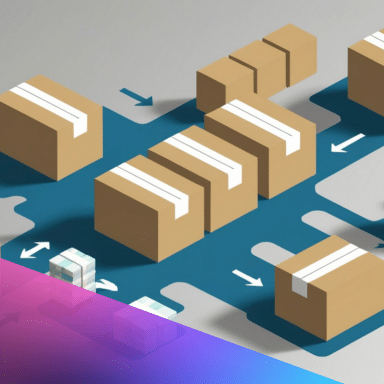
Running out of clean towels at a property. Buying the same amenities twice because nobody tracked stock. Sending a cleaner to a unit that has no supplies waiting.
These moments feel minor. But they’re happening dozens of times a month across your portfolio and every single one costs you money.
The real problem isn’t the incident itself. It’s that most property managers have no system to prevent it. And without a system, the losses compound quietly in the background, invisible until they show up in your P&L.
This is the hidden cost of poor inventory management in vacation rentals. And it’s bigger than you think.
Why Supply Chaos Is So Common in Short-Term Rentals
Short-term rental operations are uniquely demanding. Turnover is fast. Guests are unpredictable. And properties are often spread across different locations, each with different stock levels and different needs.
Most property managers start small. A spreadsheet here, a WhatsApp message there. It works until it doesn’t.
As your portfolio grows, informal systems break down fast. You’re no longer managing five apartments. You’re managing forty, with six cleaners, three suppliers, and a dozen different product types across multiple locations.
At that scale, improvisation isn’t a strategy. It’s a liability.
The industry has evolved significantly in recent years. Guests expect hotel-grade standards. Owners expect transparency. Cleaning operations need to be streamlined and efficient not patched together with manual workarounds.
The Real Cost of Running Out of Supplies
Let’s talk numbers, because this is where the conversation gets uncomfortable.
When a cleaner arrives at a property and there are no linens ready, what happens? You pay for their time while they wait. You pay for an emergency delivery. You delay checkout preparation, which can impact your next guest’s arrival.
That single incident can easily cost you €50–€100. Multiply that by ten times a month, and you’re looking at over €1,000 in avoidable losses, every single month.
And that’s just the direct cost. There are indirect costs too: the cleaner who starts to lose trust in your operation, the owner who sees a delayed status update, the guest who leaves a three-star review because the room wasn’t ready on time.
Poor inventory management doesn’t just hurt your wallet. It damages your reputation and your relationships, the two things that sustain a property management business long-term.
What Happens When You Overstock Instead
Running out isn’t the only risk. Overstocking is equally damaging, just in a different way.
When property managers don’t have visibility over what’s in stock, they tend to over-order “just in case.” Products sit in storage. Expiry dates pass. Items get misplaced across multiple warehouse locations.
The money is tied up in supplies that aren’t being used. Your cash flow takes the hit.
This is especially true for consumable items like guest amenities, cleaning products, and linen. These aren’t big-ticket purchases individually, but they add up fast at scale.
A professional approach to inventory management creates balance: enough stock to cover your operations confidently, without excess that bleeds cash and creates clutter.
The Professionalization Problem
Here’s the uncomfortable truth: most vacation rental property managers are running 21st-century businesses with 20th-century operational systems.
The booking side has been transformed by technology. Dynamic pricing, channel management, PMS integrations these are standard tools now. But the operational back-end? It’s often still running on spreadsheets, group chats, and gut instinct.
This gap is costing the industry money. And it’s widening as portfolios grow. Your cleaning schedule and operational efficiency are directly tied to your profitability.
But profitability doesn’t just come from pricing your properties well. It comes from controlling your operational costs and inventory is one of the biggest uncontrolled costs in the business.
The operators who will thrive in the next five years are those building the operational infrastructure to support their growth. Supply chain management, warehouse control, and purchasing processes are no longer “nice to have.” They’re core competencies.
What Good Inventory Management Actually Looks Like
So what does a proper system/look like in practice?
Centralized Product Catalog
Every supply item from shower gel to pillow covers to cleaning chemicals lives in one place. Each product has a defined name, category, and unit. There’s no ambiguity about what was ordered or what’s in stock.
This sounds basic. But without it, you’re operating blind.
Warehouse and Stock Visibility
You know exactly what’s at each location. You know when stock is running low before it runs out. You can see movement history: what came in, what went out, and when.
This visibility is what separates reactive management from proactive management.
Purchase Order Workflow
When you need to reorder, there’s a formal process. You create a purchase order, track its status, and receive stock against it. There’s a paper trail. There’s accountability.
No more informal requests. No more forgotten orders.
Inventory Forecasting
The most advanced operations go further. They forecast demand based on upcoming bookings, seasonal patterns, and historical consumption. They know two months in advance what they’ll need and they order accordingly.
This is where inventory management moves from cost control to competitive advantage.
The Link Between Inventory and Maintenance
Supply chain and maintenance are more connected than most managers realize.When a cleaner spots a broken fixture or a damaged item, that triggers a replacement need.
If there’s no system connecting that report to your stock and purchasing workflow, things fall through the cracks. Effective property maintenance requires a structured process from issue reporting to resolution.
And that process should include supply chain visibility knowing whether the replacement part or item is in stock, and if not, triggering a purchase order automatically.
The best operations treat maintenance and inventory as part of the same system. Because they are.
Inventory Management Built for Property Managers
In March 2026, Doinn released its Logistics feature in early access and it’s the first real answer the industry has had to this problem.
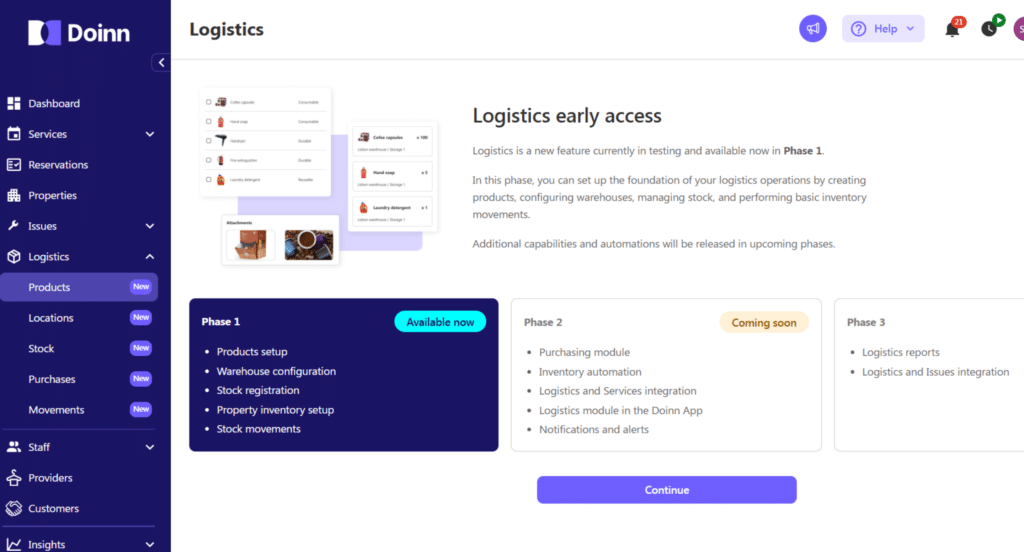
Logistics is designed specifically for property managers managing short-term rentals at scale. It’s not a generic inventory tool repurposed from another industry. It’s built around how property operations actually work.
In this first phase, you can:
- Create and manage a product catalog: everything in one place, properly named and categorized
- Configure warehouses: manage stock across multiple locations with full visibility
- Track inventory movements: see exactly what’s going in and out, and when
- Create purchase orders: formalize your buying process with a proper workflow
This is just Phase 1. Two more phases are planned, which will expand the capabilities further as the feature matures.
And for early adopters? It’s available at no cost during the beta period.
If you’re already using Doinn to manage scheduling, staff, and quality. Logistics integrates directly into the same platform. No new tools, no new logins, no new friction.
Who Needs This Now
Not every operator needs a logistics system today. If you’re managing five properties with one cleaner, a spreadsheet still works.
But if you’re managing twenty or more properties especially across multiple locations you’re almost certainly leaving money on the table without one.
Ask yourself:
- Do you know exactly what’s in stock at each of your properties right now?
- Have you ever had to make an emergency supply run in the past month?
- Do you know your cost per stay for consumables?
- Could you tell a supplier exactly what you need for the next two months?
If you answered “no” to any of these, your inventory management is costing you money. Quietly. Consistently. Every month.
The Operational Foundation for Growth
There’s a broader point here that goes beyond supply management.
The vacation rental industry is becoming more competitive, more professionalized, and more demanding. Guests have higher expectations. Owners have more options for who manages their properties.
To win in this environment, operators need to build the kind of operational foundation that scales. That means automation, visibility, and data not improvisation.
Your financial health as a property manager depends on controlling operational costs. And operational costs start with knowing what you’re spending, where, and why.
Inventory management isn’t a back-office function. It’s a profit lever. And the managers who treat it that way will be the ones who come out ahead.
Final Thought: The Cost of Doing Nothing
Every month you operate without a proper inventory system, the losses continue. They’re invisible in your day-to-day, but they show up over time in thinner margins, in operational chaos, in owner conversations that shouldn’t be happening.
The good news is that fixing this doesn’t require a massive overhaul. It starts with visibility. It starts with structure.
Doinn’s Logistics feature is now in early access free during beta. If you want to be among the first property managers to bring proper inventory management into your operations, reach out to the Doinn team to get access.
The supplies are there. The guests are coming. The only question is whether your systems are ready.